2026 was a landmark year for BTT! From restoring natural flow to an entire tidal creek system, to advancing shark depredation research for better days on the water, read about six ways that BTT made significant progress toward our mission this year–and what’s coming up in 2027 for the conservation of our coastal fisheries.
1. Bringing Bahamian Tidal Creeks Back to Life
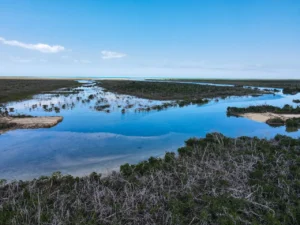
BTT celebrated the completion of the first project to restore obstructed creek systems in The Bahamas. Working in partnership with The Bahamas Ministry of Works & Family Island Affairs and in collaboration from local communities, the removal of an obsolete logging road has restored tidal flow to West Gap Creek along Grand Bahama’s North Shore.
“This is bigger than just a construction project,” said Rashema Ingraham, BTT Caribbean Program Director. “We are reopening tidal flow at places like West Gap Creek and now moving on to our next project at August Creek, because restoring the natural connection between the flats, mangroves, and the ocean has a significant impact on the environment and provides great value to our coastal communities.”
Healthy creeks provide habitat for bonefish, juvenile tarpon, and other wildlife; they support natural mangrove regeneration; they strengthen coastal resilience against erosion and storm surge, better protecting local communities from future storms and rising seas; and fishing guides and commercial fishermen benefit from greater access to healthy fishing grounds.
BTT will soon break ground at August Creek and expand this initiative to four additional creek systems in need of restoration on Abaco. To support these efforts, click here.
2. Restoring The Everglades and Cleaning Up Florida’s Water
BTT remains focused on securing robust, sustained funding for Everglades restoration and statewide water-quality improvements that directly support Florida’s iconic fisheries. With partners, BTT advocates for state and federal funding to complete the EAA reservoir and related Everglades restoration projects.
2026 saw great progress for these efforts. Restoration of the Everglades has been accelerated thanks to a new agreement between the South Florida Water Management District and the U.S. Army Corps of Engineers (USACE). The agreement has advanced the timeline for completing key Everglades restoration projects in South Florida, including the EEA Reservoir and the Blue Shanty Flow Way, which are critical to improving water flows to Florida Bay. This landmark agreement between the USACE and the State of Florida demonstrates the shared federal and state commitment to restore one of the world’s most unique ecosystems.
At the same time, BTT is committed to advancing comprehensive water-quality protections, including: addressing emerging contaminants such as pharmaceuticals that threaten coastal water quality; securing funding for innovative technologies to address these contaminants; and conducting cooperative projects with multiple universities to understand their impacts on our fisheries.
BTT is also advocating for investments in critical habitats across the state, with emphasis on Southwest Florida, the Indian River Lagoon, Biscayne Bay, and the Florida Panhandle—regions vital to the state’s sportfish populations and the coastal economies that depend on healthy waters.
3. Advancing Shark Depredation Research
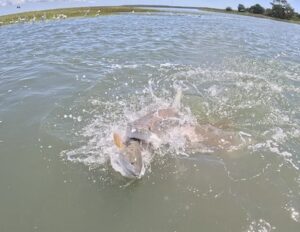
BTT launched its Shark Depredation Project in 2024 in response to the dramatic increase in shark-angler conflicts over the past decade. The project made significant progress in 2026 toward understanding the factors that are driving this increase in shark depredation, which includes a shark taking a hooked fish and a shark eating a fish that has just been released by an angler.
BTT’s Shark Depredation Project seeks to better understand the urgent problem and test mitigation tactics in the Florida Keys. Through a survey and a workshop, recreational anglers and fishing guides helped BTT identify areas that are shark depredation hotspots. Next, BTT scientists conducted tagging research and diet analysis of lemon sharks in those areas to begin to uncover whether the depredation is simply due to more sharks, or due to sharks modifying their behavior to depredate more frequently.
So far, researchers have learned that depredation has increased substantially in the past 10 years. The study’s findings show some lemon sharks move around more than others; the majority of depredation hotspot users are juvenile female lemon sharks; and that hotspot-using sharks had more snook in their diet than those that are more mobile. The cold spell that hit South Florida in January 2026 also provided a natural experiment, as already tagged sharks showed they could make long-distance round-trip journeys. That leads researchers to believe that moving sharks that use depredation hotspots will not be effective.
Next year, the science team will begin testing other mitigation tactics. BTT will then work with resource managers and anglers to deploy these science-backed solutions to find a sustainable balance between sharks and recreational fishing in Florida.
4. Protecting and Restoring Habitat for the Next Generation of Tarpon in Florida
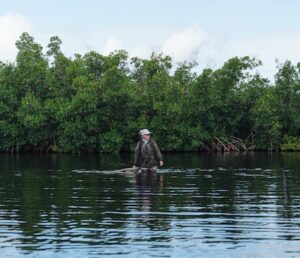
Loss and degradation of nursery habitat is the single greatest threat to tarpon populations worldwide. Through its Juvenile Tarpon Habitat Initiative, BTT is actively protecting and restoring essential nursery habitat in Florida to ensure healthy tarpon populations for the future.
BTT is leading two restoration projects in Rookery Bay near Naples, which will restore natural hydrology to over 1,000 acres of vulnerable mangrove and marsh habitat. Permitting for the Rookery Bay sites is complete, making these projects “shovel-ready” as soon as funding is secured. At the same time, planning is underway to restore four juvenile tarpon habitat sites in Charlotte County. BTT has also identified hundreds of juvenile tarpon habitat locations throughout Florida, thanks to the participation of residents, anglers, and guides who shared their locations with BTT’s Juvenile Tarpon Habitat Mapping Project. These identified habitat locations range from natural, which BTT will work to protect, to degraded, which BTT will work to restore. We continue to use this information to advocate for the protection of these sites from development and other disruptive activities.
If you are aware of any nursery habitats with juvenile tarpon 12” and under, please contact BTT at: info@bonefishtarpontrust.org.
5. Reaching Mangrove Milestones
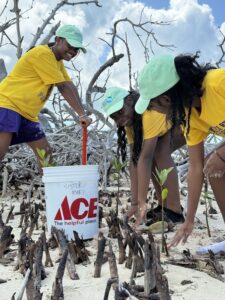
On World Ocean Day in June, BTT celebrated a mangrove milestone: 150,000 seedlings planted in Grand Bahama and Abaco! Working with partners, fishing guides, volunteers, and students, we are restoring habitats damaged by Hurricane Dorian at risk of coastal erosion. BTT has turned mangrove restoration into a learning opportunity for students to have a hand in restoring the ecosystems that support their communities. A group of students from Grand Bahama were so inspired by BTT’s efforts that they asked for help building their own mangrove nursery. Many of the seedlings they planted with us on Earth Day in April were those that they raised at school!
Next year, BTT will continue working with our Bahamas Mangrove Alliance partners to strengthen protections for mangroves nationwide. Having now planted more than 850,000 mangroves with our BMA partners, we will also soon achieve our collective goal of 1 million!
6. A Record Year for BTT
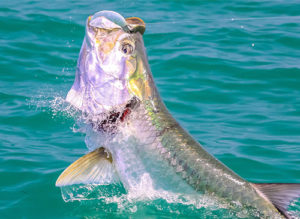
Fueled by the generosity of individual donors, corporate partners, and foundations, BTT just completed the most successful fundraising year in its history, raising more than $11.3 million to advance conservation of flats fisheries. That momentum is only building. As BTT embarks on an ambitious five-year strategic plan, 2027 is poised to be another landmark year.